
Alternative vehicles ‘assessed’ amid Ajax fears, minister confirms

- Alternative platforms were considered to replace the British Army Ajax, should the Ministry of Defence decide to end the programme after so long
- Other platforms may include the AMPV, CV90 or Puma
- Minister promises he will “outline next steps” to Parliament after Easter recess from 13 April
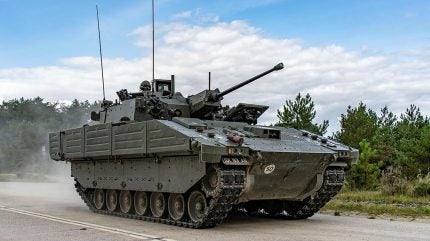
While investigators scrutinise the British Army’s Ajax armoured vehicles due to enduring technical defects, one UK minister confirmed that several alternative platforms have been assessed in the event that the UK decide to replace the stagnant vehicle.
Responding to concerns expressed by a parliamentary colleague in a written statement, published on 27 March, Luke Pollard, minister for defence readiness and industry, recounted the Government’s contractual privileges: step in rights, demand recovery plans, or termination.

Discover B2B Marketing That Performs
Combine business intelligence and editorial excellence to reach engaged professionals across 36 leading media platforms.
Find out more
The need to reiterate these options indicates an unprecedented willingness to consider an end to the programme, which was initially planned for delivery almost ten years ago.
So far, General Dynamics Land Systems UK has delivered 185 of 589 vehicles ordered. All these units were assembled, integrated and tested at its Merthyr Tyfil production plant in Wales. About 80% of the production process takes place in the UK.
After four months of investigations, launched after operators complained of the level of noise and vibration inside the vehicle during Exercise Titan Storm in November 2025, Pollard will update the House of Commons on the programme after the Easter recess (from 13 April), “to outline next steps.”
The Ministry of Defence declined to comment when Army Technology asked what type of vehicles and how many were assessed.
Nevertheless, potential alternatives may be deduced based on past procurement proclivities and expressed requirements, while maintaining a healthy understanding that these two factors can sometimes be at odds.
AMPV
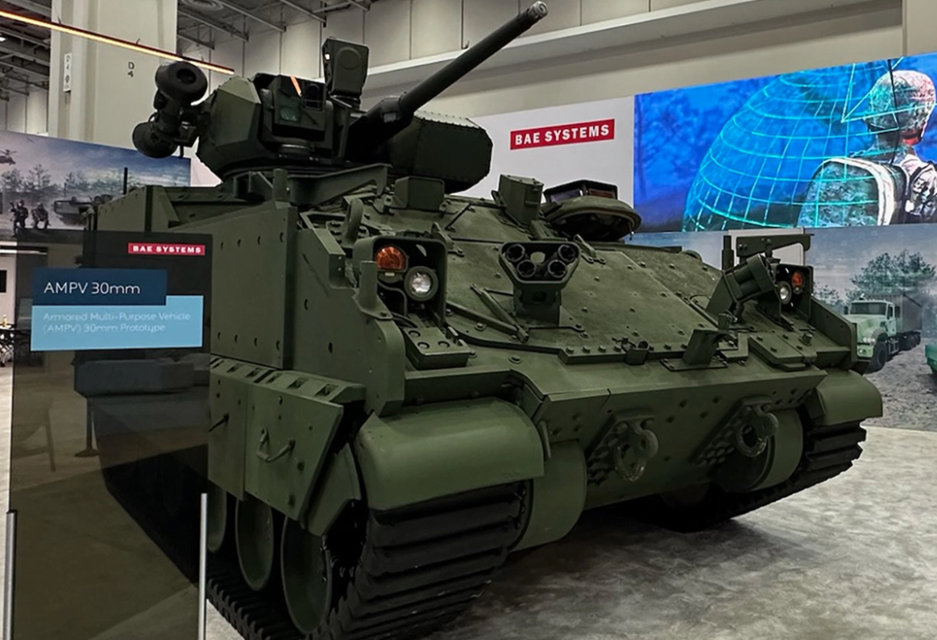
The US-built Armoured Multi-Purpose Vehicle (AMPV), built by global defence prime BAE Systems, is one potential alternative to Ajax.
This particular fighting vehicle concept includes a 30mm Kongsberg Protector RT20 medium calibre turret, a remote weapon system the US Marine Corps selected to field on its 30mm AMPV variation.
BAE Systems displayed the vehicle in Washington at the AUSA exhibition in 2024.
Fox Walker, a GlobalData defence analyst, emphasised the UK’s tendency to rely on American military vehicles.
“Currently, the UK only operates military land vehicles originating in the US or UK, with an inconsequential number from Germany. This habit may have limited the number of potential suppliers they considered.”
Despite this proclivity, Walker also reflected on the design differences distinguishing Ajax and AMPV.
While the former was bought as a turreted, sensor-heavy reconnaissance/ISTAR platform intended to operate forward with armoured formations and feed intelligence, the latter serves as an armoured support vehicle for more general purpose missions.
“AMPV’s value proposition is more about protected support roles inside armoured brigades than about being the ‘eyes’ of the force,” as Ajax is, Walker continued. Likewise, BAE emphasise the AMPV’s modular common top plate (a universal mounting interface on the roof of the vehicle) that may host a range of systems, contrary to the purpose-driven Ajax.
AMPV would also likely require further UK-specific technology and training changes that would increase costs as well.
CV90
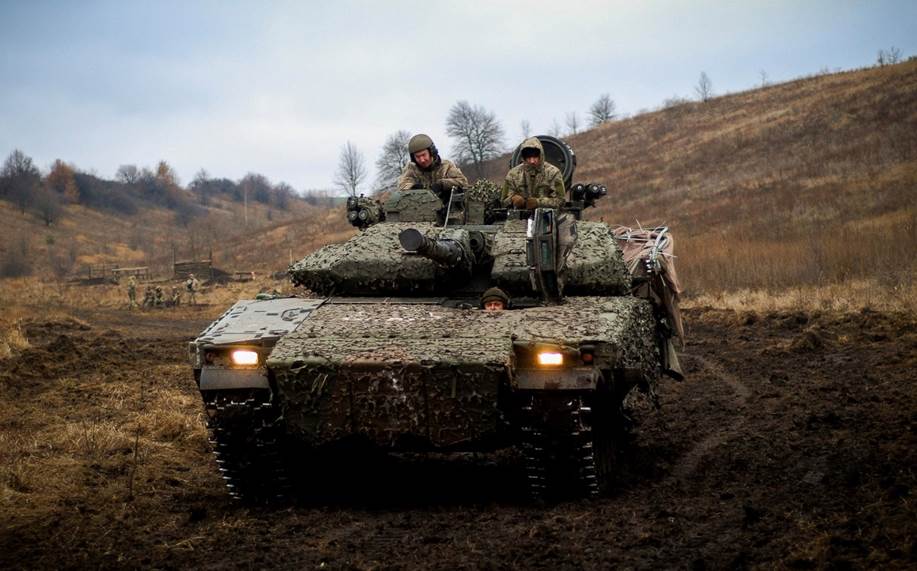
Another alternative platform may be the Combat Vehicle 90 (CV90).
Observers have hailed the Swedish vehicle, which boasts ten user nations, all of whom reside in Europe, for its strong continental industrial base, allowing interoperability alongside a reliable development and maintenance ecosystem.
CV90 meets some UK Government requirements underscored by the Strategic Defence Review, issued in June 2025, first among them was the newfound value imbued in bilateral agreements with allies in Europe, such as the UK-Norway Type 26 frigate deal.
In considering CV90, the UK would be able to tap into a robust supply chain and a proven vehicle design, unencumbered by the failures which have persisted with Ajax.
“I expect the CV90 would still have made the list of potential choices, given its popularity within Nato and success in Ukraine,” Walker stipulated. CV90 success may be measured by BAE Systems’ localisation in Ukraine in order to sustain its fleet only 18 months after Russia’s full-scale invasion began in earnest.
Meanwhile the Defence Industrial Strategy, published three months later, prioritises UK based suppliers.
While CV90 is not currently produced in the UK, there is certainly scope for this eventuality. This goes for AMPV too, as both vehicle designs are the intellectual property of BAE Systems (entities in Sweden and the US respectively), which itself has a considerable footprint in the UK already, such as the Telford facility as part of its joint venture with Rheinmetall to develop Challenger 3 main battle tanks.
A UK order for either would work for a final assembly, much like the Ajax at present, although there are currently too few British sites for such work.
Puma
Just as the UK opted for Germany’s Remote Control Howitzer 155, to some surprise at the time, the Ministry of Defence may, once again, emulate the German Army force structure, which brings together the 8×8 Boxer with Puma infantry fighting vehicles (IFVs).
The British Army is already halfway there with its own Boxer mechanised infantry vehicle fleets.
Russia’s war in Ukraine has demonstrated the destructive power of loitering munitions and other anti-vehicle weaponry, therefore pursuing platforms that offer balanced advantages of manoeuvrability and advanced armour seems reasonable.
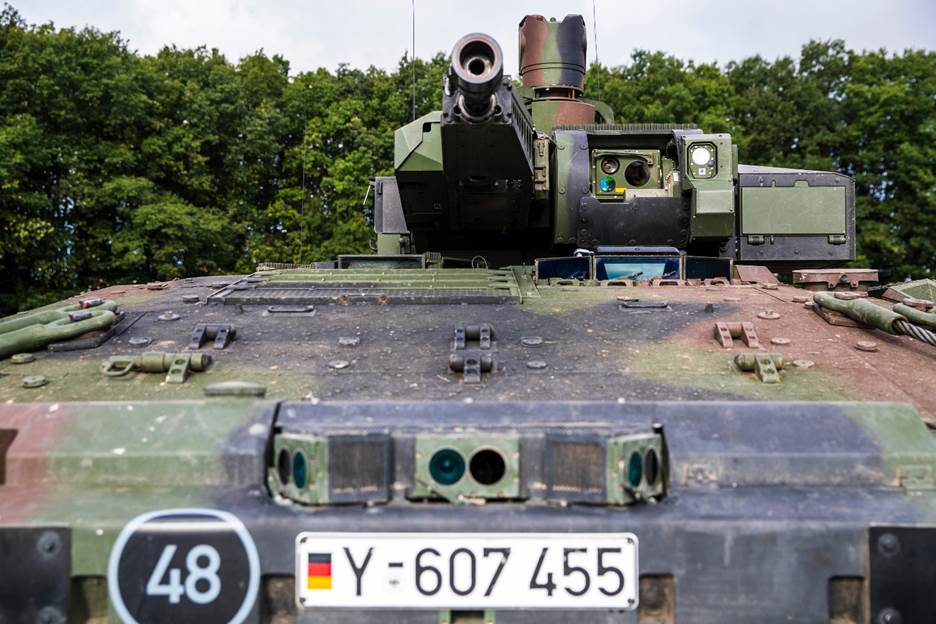
But Puma has its own drawbacks, Walker considered, which make it a less likely alternative to Ajax compared to the adaptability of either AMPV or CV90:
“The Puma has a significantly higher unit cost than the Ajax, and likely would have required changes to fit the needs of the British Army.”
The cost concern is no easy concession for the UK. The Government has routinely delayed publicising a long awaited cost breakdown for priority programmes.
This inertia comes down to the tight fiscal grip of the Treasury, constrained to deal with short-term overspending, to realise the longer term value of defence security, contrary to its claims it is embracing “defence as an engine for growth.”
