
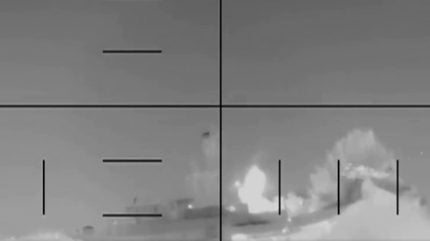
Live: US submarine sinks Iranian frigate

- US confirms its submarine sunk an Iranian frigate in the Indian Ocean
- France is deploying its aircraft carrier and escorts to the region, as Greece deploys new frigate
- CENTCOM issues update, detailing scale of air attacks on Iranian military and command structures
Update 4 March (15:01) – The US Defense Secretary Pete Hegseth has announced that an American submarine fired a torpedo at an Iranian warship, sinking it in the Indian Ocean near the southern Sri Lankan coast during the night of 3 March.
While the specific submarine type was not made public in his speech, Hegseth did state that it was the first time an American submarine had sunk a warship since the Second World War.

Discover B2B Marketing That Performs
Combine business intelligence and editorial excellence to reach engaged professionals across 36 leading media platforms.
Find out more
The sunken ship is believed to be the IRIS Dena, which was commissioned five years ago. The Moudge-class frigate, part of Iran’s Southern Fleet, had participated in the India-led Milan International Fleet Review in the Bay of Bengal in the second half of February 2026.
Notably, a US Navy Arleigh Burke-class destroyer USS Halsey (DDG 97) and a P-8A Poseidon maritime patrol and reconnaissance aircraft had also participated in the same naval exercise as the IRIS Dena.
______________________________________________________________________________
Update 4 March (09:20) – European navies are flocking to the Mediterranean region to throw an air defence blanket over Cyprus, which has been targeted by drones launched from Iran’s proxy force in Lebanon, the Hezbollah paramilitary group.
The French Navy will deploy its Charle De Gaulle aircraft carrier strike group to the region, while Greece has also confirmed it would deploy one of its French-built FDI frigates, the HN Kimon, to aid in the defence of Cyprus.
The moves followed earlier strikes on British Sovereign Base areas of Cyprus, incidents that the UK was apparently unprepared for, with the UK Government only yesterday committing to the deployment of a Type 45 air defence destroyer to the region.
The Grek Cypriot Government was highly critical of the UK’s intransigence in deploying air defence systems in advance of the Iran-Middle East crisis.
Meanwhile, US CENTCOM, providing an operational update in the early hours of 4 March, said than during the opening 100 hours of Operation Epic Fury more than 2,000 targets in Iran had been struck.
This is double that seen during the so-called Shock-and-Awe campaign at the outset of the Second Iraq War in 2003.
“We are focused on shooting at all the things that can shoot at us,” said Adm Brad Cooper, CENTCOM commander.
Iranian losses include 17 warships and submarines, including its converted drone carrier.
In addition, Cooper said that US forces had fired PRSM mobile ballistic missiles in combat for the first time. These munitions would have been fired from GCC0based launchers over the Perian Gulf at targets in Iran.
_________________________________________________________________________
Update 3 March (22.30) – The UK has deployed a Type 45 destroyer, HMS Dragon, and two AW159 Wildcat helicopters to the Eastern Mediterranean, according to a government statement issued toward the end of the fourth day of the campaign.
This decision comes after the Iranian regime struck a military base in Bahrain which came close to hitting 300 British personnel on 28 February, and a subsequent strike on RAF Akrotiri in Cyprus on 1 March.
These incidents have left many scratching their heads wondering why it took the government so long to send an air defence ship to the region.
British involvement has only extended to defensive operations so far, the Prime Minister Keir Starmer insisted yesterday while addressing Parliament, but still relaying US President Donald Trump’s disagreement with the decision not to participate in the offensive strikes against Iranian territory.
HMS Dragon will help to to detect, track and destroy aerial threats, including drones. The ship is fitted with the Sea Viper missile system, which can launch eight missiles in under ten seconds and guide up to 16 missiles simultaneously.
Likewise, the two Wildcats will serve as “drone busters” contrary to its conventional role in maritime attack missions, marking the Royal Navy’s . The helicopter will combine its nose-mounted electro-optical MX-15 Wescam with the ability to carry up to 20 Martlet missiles to detect and down the drones.
Meanwhile, the Royal Air Force also marked a milestone in the conflict: F-35B fighters shot down drones over Jordanian airspace (the first time the jets shot down a target on operations).
_________________________________________________________________________________________
Update 3 March (14.34) – Following the delayed entry of the Iran-backed paramilitary group Hezbollah in the conflict yesterday (2 March), the Israeli Defence Forces (IDF) deployed a forward presence group (FPG) into southern Lebanon this morning.
This tactical move will establish a defensive buffer aimed to prevent infiltration, allow mointoring and observation, and enable strikes inside the country.
The FPG will coincide with targeted strikes against Hezbollah’s infrastructure. On 2 March, prior to FPG deployment, the Lebanese Health Ministry stated Israel conducted airstrikes on the southern suburbs of Beirut and southern Lebanon resulting in the deaths of 31 citizens and injuries to 149 others.
“Hezbollah chose to attack Israel on behalf of the Iranian regime, and it will bear the consequences of its actions”, the IDF said in a post on the social media platfrom X.
Meanwhile, the United Nations Interim Force in Lebanon (UNIFIL) noted the crossing of Israeli soldiers into Lebanese areas near Markaba, Al Adeisse, Kfar Kela and Ramyah. UNIFIL reiterated its calls for de-escalation, and maintained that its peacekeepers continue to carry out their mandated tasks “despite extremely challenging conditions.”
_________________________________________________________________________________________
Update 3 March (09:15)- Qatar’s Ministry of Defense has claimed that fighters of the Qatar Emeri Air Force (QEAF) shot down two Su-24 aircraft inbound to Qatar from the direction of Iran on 2 March.
The Ministry added that seven ballistic missiles had been intercepted by ground-based air defence system, and five drones, likely of the Shahed-type, had been destroyed by QEAF and Qatar Emeri Navy Forces platforms.
Meanwhile Saudi Arabia said on 3 March that eight Iranian drones had been shot down near the cities of Riyadh and Al-Kharj. The US embassy in Riyadh was struck by two drones, causing some damage.
US and Israeli forces continued their assault on Iranian military positions overnight.
However, CENTCOM stated that as of 4pm eastern time on 2 March, the number of US fatalities since 28 February had risen to six service personnel.
_________________________________________________________________________________________
The UK Ministry of Defence (MoD) acknowledged an Iranian drone attack against RAF Akrotiri, a British military air base in Cyprus this morning, at midnight local time. There were no casualties.
Since then, an MoD spokesperson has said that “force protection in the region is at the highest level and the base has responded to defend our people.”
It is understood that the MoD has moved additional capabilities to bases in Cyprus as part of its ongoing work to support security and stability in the Middle East.
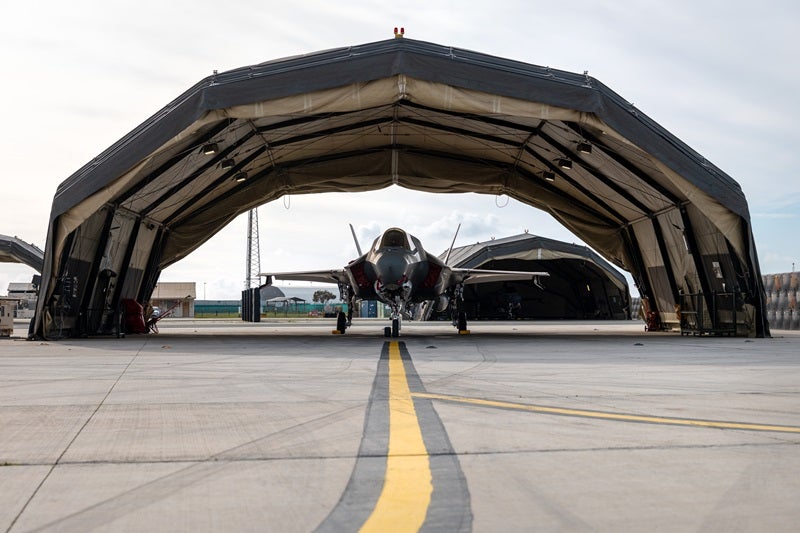
These capabilities are solely focused on defensive measures, mainly detecting and defeating airborne threats. They include radar systems, counter-drone systems, F-35 jets, and ground-based air defence.
“This is a live situation and further information will be provided in due course,” the spokesperson concluded.
_________________________________________________________________________________
The Kuwaiti Ministry of Defence has confirmed that “several” US military aircraft “crashed” over its territory this morning, while assuring the safety of their crews. Joint investigations are ongoing.
US Central Command (CENTCOM) has just published additional details confirming the incident, adding that three F-15E Strike Eagle fighter jets were indeed shot down while contributing to the ongoing US-Israeli strike campaign against the Islamic Republic of Iran, known as Operation Epic Fury.
CENTCOM maintained that the crash was “due to an apparent friendly fire incident.”
During active combat – including attacks from Iranian aircraft, ballistic missiles, and drones – the US Air Force fighters were mistakenly shot down by Kuwaiti air defences.
All six aircrew ejected safely, have been safely recovered, and are in stable condition.
_____________________________________________________________________________________
The UK has cited “collective self-defence” among its reasoning for its response to waves of Iranian drone and missile attacks in the Middle East, which follows the start of a US-Israeli bombing campaign on 28 February across Islamic regime sites in Iran.
While UK air assets have not been involved in direct strikes on Iran, deployed airborne capabilities are tasked with securing key UK military sites in the Middle East region.
On 1 March, an RAF Typhoon multirole fighter operating as part of a joint UK-Qatari squadron intercepted an Iranian drone heading for the territory of Qatar.
In a statement, the UK Government said the Typhoon was conducting a “defensive air patrol” and used an air-to-air missile to shoot down the Iranian drone.
US and allied military sites in the region, as well as indiscriminate strikes on cities such as Dubai. Doha, Duqm, Manama, and others, have been reported over the weekend, with Iran utilising the Shahed loitering munition extensively.
Similar usage is typical of Russia in its ongoing war in Ukraine, which is now licence building Iran’s Shahed under the name ‘Geran’.
Airforce Technology spoke with residents in Dubai, who said they have been told to shelter in place. While air raid sirens are not active across the city, messages are being broadcast over the city’s mobile networks.
One resident on 2 March said he was “hunkering down” and that he had regularly heard “loud thumps” from inbound strikes.
It is not known whether these are a result of interceptions from the UAE overworked air defence network, or Iranian drone striking their targets.
UK military on high alert in Middle East
The UK military is on high alert with its military sites in the Middle East vulnerable from Iranian drones and missiles. Military personnel have reportedly been within “a few hundred yards” of strikes, according to UK officials.
In addition to the joint UK-Qatari Typhoon squadron providing air cover for Qatar, the UK maintains a small network of military installations across the region, including the mostly defunct Naval Support Facility in Mina Salman in Bahrain, and the British Army training centre housed as Duqm in Oman.
Reports circulated that a UK military counter-UAS team downed an Iranian drone heading for a coalition base in Iraq, where British personnel were deployed.
Iranian missiles were also reported to have been intercepted in the region of Cyprus, the site of one of the last remaining UK strategic overseas military bases.
The UK Government, which has opted not to participate in the US-Israeli strikes, have now acceded to US requests to allow its air bases to be used to support them, including assets based in Cyprus and the Diego Garcia site in the Indian Ocean.
