
UK military timeline: key equipment out-of-service dates

Defence procurement is a complex balance of budgets, timelines, and requirements, all of which compete to gain primacy in the argument, as national governments, for the main, seek to generate the minimum-required capability at the lowest possible price.
For the UK, currently embarking on a large-scale modernisation across its military, the timeline argument is perhaps the most acute with dozens of platforms due to leave service over the next decade.
This is particularly critical in the land and naval domains, where the British Army and Royal Navy contend with empty inventories and obsolescent capability.
Broken down by the land, sea, and air domains, Army Technology investigates the out-of-service dates for key UK Armed Forces platforms and replacement programmes. The list is not exhaustive, but rather indicative of areas of specific strength and weakness.
British Army: selected platforms
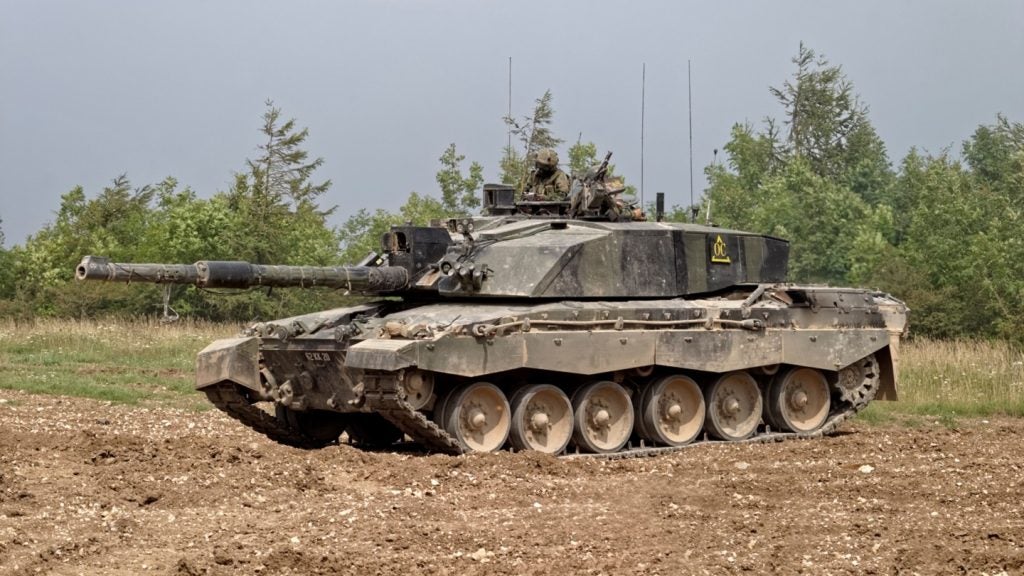
The British Army is the focus of several platform replacement programmes, although delays have resulted in confusion among industry, while some capabilities have been lost in their entirety.
| Vehicle type | Out of Service Date |
| Challenger 2 main battle tank | 2027 (phased replacement with Challenger 3) |
| AS90 155mm self-propelled artillery | 2025 (replacement from 2029 with RCH 155) |
| Warrior infantry fighting vehicle | 2027 (no like-for-like replacement) |
| Bulldog armoured personnel carrier | 2030 (no like-for-like replacement) |
| Stormer mobile short range air defence | 2026 (no known replacement) |
| Viking tracked armoured vehicle | 2029 (no like-for-like replacement) |
| Jackal 2 reconnaissance vehicle | 2030 (replacement with LMP programme, timeline uncertain) |
| Cougar-family MRAPs | 2028 (replacement with LMP programme, timeline uncertain) |
| Foxhound 4×4 patrol vehicle | 2030 (replacement with LMP programme, timeline uncertain) |
| Panther 4×4 command vehicle | 2037 |
| M270A1/2 MLRS | At least 2050 |
Some of the above-mentioned platforms will be replaced by the incoming Boxer Mechanised Infantry Vehicle (MIV), a platform slowly being introduced into British Army service. In November 2019 523 Boxer vehicles were ordered in four build configurations, covering eleven different roles, with a contract placed for a further 100 units in April 2022.
However, on a purely numerical basis, the currently planned 623 Boxers will not replace the in excess of 1,500 vehicles the British Army will be retiring from service by the end of the decade.
Capability gaps include virtually no long-range 155mm artillery (just 14 Archer systems obtained from Sweden) until at least 2029 and likely beyond, low munitions stockpiles on account of Ukraine donations, and little reserve materiel, for similar reasons.
Royal Navy: selected platforms
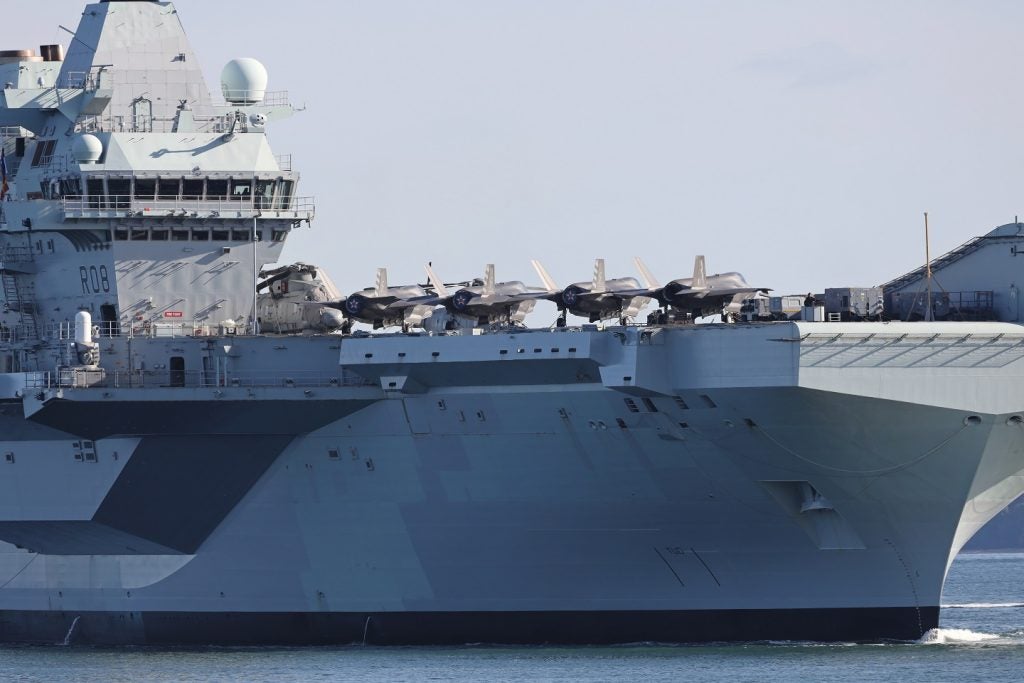
In a parlous state, the Royal Navy has just a handful of functioning major surface combatants, and capability gapping its ability to effectively perform amphibious assault operations. Of all carrier-capable navies, it is the most top heavy, with the two Queen Elizabeth-class vessels representing the largest proportion of naval tonnage of the surface fleet among Nato members.
| Class of ship | Out of Service Date |
| Queen Elizabeth-class aircraft carriers | 2069 |
| Albion-class amphibious assault ships | 2025 |
| Daring-class air defence destroyers) | 2038 |
| Duke-class guided missiles frigates) | 2035 |
| Hunt-class (6 x mine hunters) | 2031 |
| Sandown-class (1 x mine hunter) | 2025 |
| River-class Batch 1 and Batch 2 offshore patrol vessels | 2028 (Batch 1) 2040 (Batch 2) |
| Astute-class nuclear-powered attack submarines | From 2035 |
| Vanguard-class nuclear-powered ballistic missile submarines | From early 2030s |
Of particular concern is the loss of the Royal Navy’s vaunted mine countermeasure (MCM) capabilities, which is being transitioned to uncrewed platforms. Such systems will be vulnerable in non-permissive environments like the Strait of Hormuz, where Royal Navy MCMVs were highly regarded by the US Navy.
Incoming platforms such as the Type 31 and Type 26 frigates are capable but will not arrive fast enough to prevent the Royal Navy service fleet dropping further still.
Royal Air Force: selected platforms
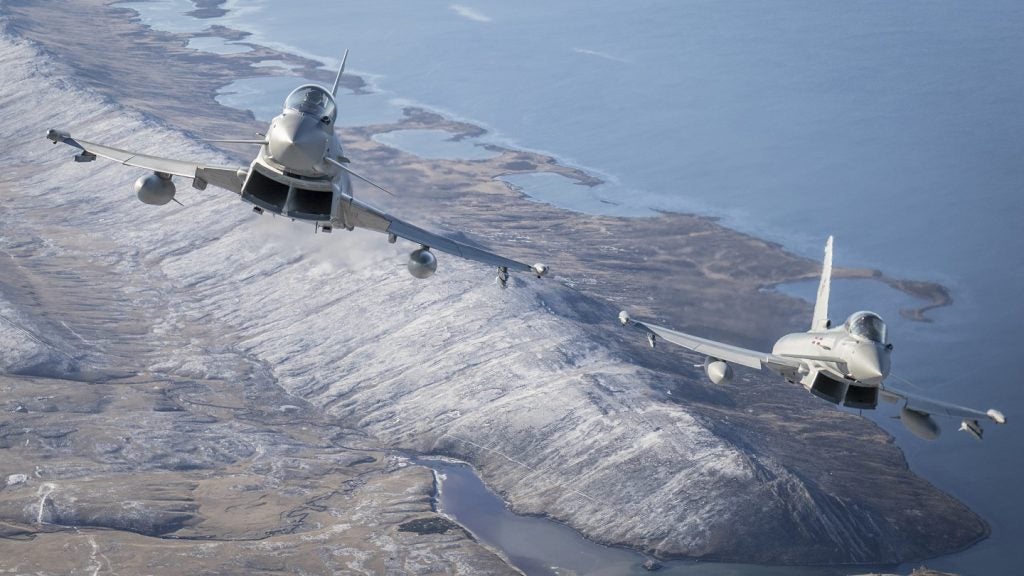
The Royal Air Force, in contrast to the UK’s other two services, is at the other end of a recapitalisation process, having introduced new fighters, maritime patrol aircraft, strategic transporters, and electronic warfare platforms.
| Aircraft type | Out of Service Date |
| A400M Atlas transporter | 2050 |
| C-17 Globemaster transporter | 2040 |
| CH-47 Chinook heavy lift helicopter | 2040 |
| F-35B Lightning stealth fighter | 2069 |
| Hawk T1 jet trainer | 2030 |
| Hawk T2 jet trainer | 2040 |
| P-8A Poseidon maritime patrol aircraft | 2045 |
| Protector RG Mk1 (MQ-9B) drone | 2040 |
| RC-135W Rivet Joint electronic surveillance aircraft | 2035 |
| MQ-9 Reaper drone | 2035 |
| R1 Shadow Electronic warfare aircraft | 2030 |
| Typhoon FGR4 multirole fighter | 2027 (Tranche 1), 2040 (Tranche 2 and 3) |
The UK government recently committed to the switching the next batch of vertical take-off and landing variant F-35B fighters, for 12 of the conventional F-35A fighters, in what was perceived as a win for the Royal Air Force in acquiring the non-naval type.
Further down the pipeline a replacement jet trainer aircraft will need to be found, and there is a concern at the service’s relatively small numbers of fighters (107 Tranche 2 and 3 Typhoons post 2027 and ~48 F-35s by 2026), but broadly, the RAF is in good health.
There is a notable capability gap in airborne early warning aircraft since the dismemberment of the Nimrod fleet, but the UK is close to bringing into service the first of three E-7 Wedgetail aircraft, due in 2026.
