
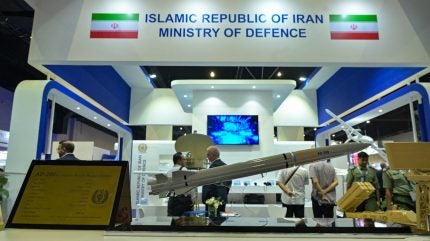
Why has Iran’s air defence network failed so badly?

- From the outset of the campaign, the US and Israel almost immediately achieved air superiority
- The IRGC is believed to have expended a lot of its missile stockpiles during the 12-Day War in June 2025
- Experts tell Army Technology how “efficient” and “capable” the EW effort of both countries has been at this point in the conflict
US-Israeli strikes, now in their fourth day, have exposed the deeply rooted failure of Iran’s integrated air defence network.
From the outset of the campaign, the US and Israel almost immediately achieved air superiority over Iran, enabling continued strikes against more than 2,000 targets within the Islamic Republic.

Discover B2B Marketing That Performs
Combine business intelligence and editorial excellence to reach engaged professionals across 36 leading media platforms.
Find out more
Iranian air defence sites have been subjected to aggressive electromagnetic spectrum operations but in tandem, its defences have also been targeted kinetically.
Notably, the two allies appear to have split up responsibility. While US strikes have focused on targeting strategic infrastructure such as air defences, command and control nodes, logistics networks, industrial facilities, and Iran’s military structure, the Israel Defence Forces have focused on targeting ballistic missile launchers, Iranian leadership and Hezbollah while also launching a forward presence group into southern Lebanon.
Depletion after years of conflict
The Iranian Revolutionary Guard Corps (IRGC) is believed to have expended approximately half of its ballistic missile stockpiles during the 12-Day War in June 2025.
GlobalData defence analyst Callum Kaye stated the country’s ability to replenish the missiles is “negligible” due to US-Israeli precision strikes.
Likewise, the IRGC retained around 100 air defence launchers prior to the latest joint campaign. It is unlikely these units would have been compatible with all the missile types they fielded, “further exasperating their ability to launch coordinated strikes,” noted Kaye.
“As a result, the IRGC will continue to switch to drones as the remaining stockpile depletes,” he determined.
Copy cat systems
Iran has primarily relied on its ability to emulate and reverse engineer systems. This is largely because of global sanctions going back to the state’s inception in the 1979 revolution.
A significant portion of medium range air defence is vested in the Mersad, a low- to medium-range air defence system, which is a reverse engineered MIM-23 HAWK with some modifications.
These are fielded alongside indigenous designs including Ra’ad 1, Ra’ad 2, 3rd Khordad and Tabas systems.
For long-range defence, Iran has developed the Bavar-373 which has comparable capabilities to the Russian S-300. For short range air defence, the country has reverse engineered the Chinese HQ-7 as the Ya Zahr, and in 2021 the Zoubin system was unveiled.
Russian S-300, EW weakness
Besides these copy cat systems, the country also leans on ageing Russian air defences, most notably the S-300PMU-2 battery.
However, Israel destroyed a significant number of these components in October 2024 and again during the 12-Day War the following year. Worse still, the Israeli Defence Forces learned all they can about the system in 2015 during joint air drills with Greece, which formerly operated its predecessor, the S-300PMU-1.
The exercise allowed Israel to develop comprehensive electronic warfare (EW) technologies specifically designed to compromise radars like those used with S-300 batteries: the Icebreaker missile and Haroop loitering munitions.
“The Israelis are masters at this,” said associate RUSI fellow Dr Tom Withington, speaking with Army Technology. “Remember, they’ve had the advantage of fighting Russian and Soviet origin air defence systems and larger integrated air defence systems… since the missile age, since the creation of Israel in 1947.
“Notwithstanding the three aircraft that we see lost to… friendly fire,” Withington continued, “the lack of losses so far as combat operations are ongoing really does underscore, I think, how efficient and how capable the EW effort, the cyber warfare effort of both countries has been at this point in the conflict.”
The US and Israel are among the few countries to develop and operationally deploy gallium-nitride (GaN)-based airborne EW jammers. These next-generation, wideband phased-array EW systems offer increased power, longer range, and directional jamming capability. They also feature cognitive artificial intelligence to support autonomous, real-time threat response.
In the ongoing conflict, the US would mostly rely on the recently operationalised AN/ALQ-249 EW systems developed by RTX while Israel, by contrast, would primarily deploy Rafael’s Sky Shield and IAI’s Scorpius SP (ELL-8222SB) escort jamming systems.
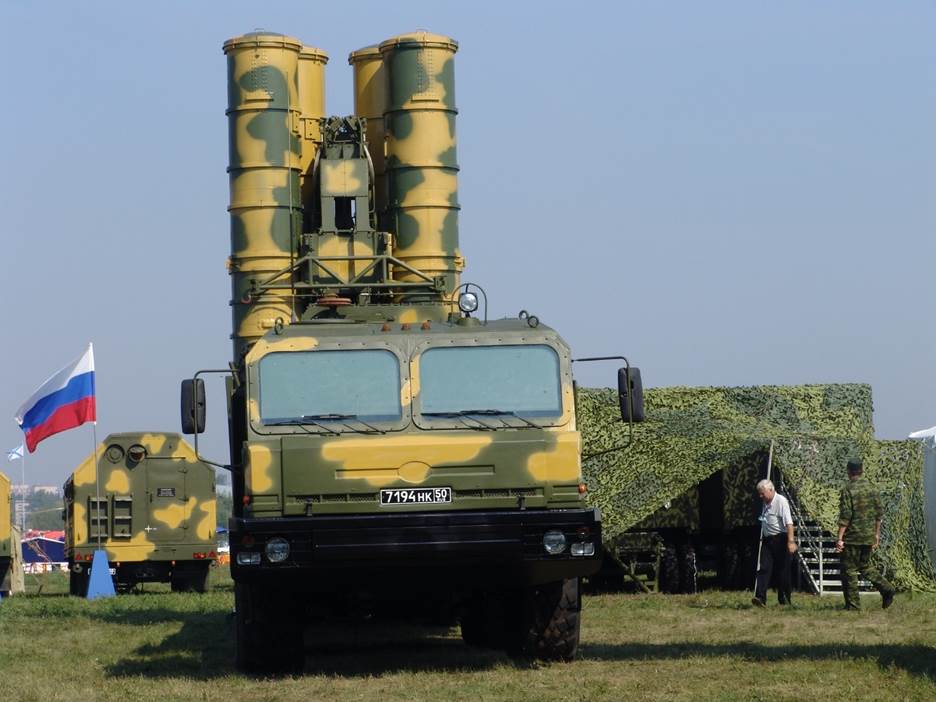
Particularly in the opening of the joint strike campaign, it is highly likely that the US repeated its electronic warfare [EW] tactics against Iran, just as US Special Forces had against Venezuela’s tactical variant of the same air defence system, the tracked S-300VM, two months ago.
“Much like their counterparts in Venezuela, the remaining [Iranian] S-300 batteries would be highly vulnerable to the EW capabilities of US and Israeli aircraft, particularly the F-22, F-35, and the EA-18G Growler, itself a dedicated EW aircraft,” Kaye considered.
At the same time, however, Iranian S-300 batteries most likely used an indigenous radar system instead of an original Russian one, which would offer inferior detection capability.
In using these indigenous radar components , Kaye continued, “operators of the remaining batteries would have needed to increase their radar power output, which in turn would have revealed their position and left them open to strikes from AGM-88 anti-radiation missiles, which is fielded by both Israel and the US.”
