
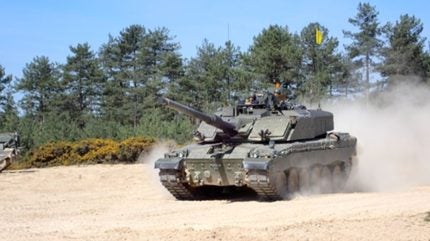
British Army’s Challenger 3 continues pre-trials testing

- Challenger 3 testing is progressing via BFM serials, feeding lessons into design ahead of formal trials
- The upgrade adds a new turret, 120mm L55A1 smoothbore gun, plus new sensors and armour
- Hitting 148 tanks is uncertain because each needs an operational Challenger 2 hull, and fleet numbers/availability are unclear
The UK’s Challenger 3 main battle tank programme continues to move through development activities via Battlefield Mission (BFM) serials, intended to provide tracking identifiers used in testing when evaluating new combat systems and, potentially, tactics.
Detailed in a 21 May social media post, Rheinmetall BAE Systems Land (RBSL), the joint venture charged with delivering Challenger 3 main battle tanks to the British Army, said the serials provided “valuable insight” into platform performance, ahead of more formal trial phases.
Data and observations gathered via BFM serials are fed back into the engineering baseline to support maturation of the Challenger 3 tank.
The minor milestone follows the completion of early-stage testing in 2024, thorough 2025, and into 2026, including firing trials, which took place in Germany.
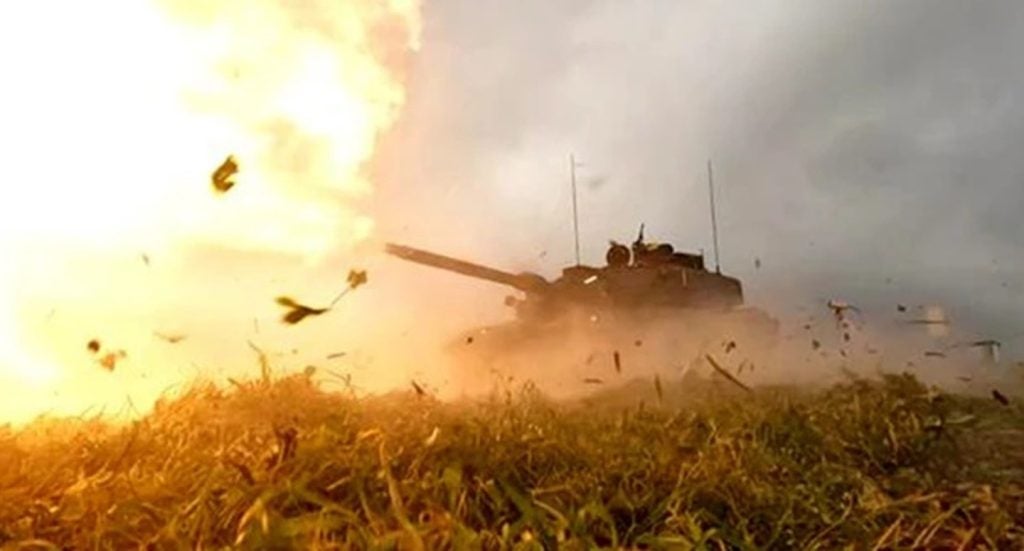
The Challenger 3 is effectively a heavily modernised Challenger 2 main battle tank currently in British Army service, incorporating a new turret to accommodate Rheinmetall’s L55A1 120mm smoothbore main gun, as well as new sensors, armour, and installation of an active protection system.
Challenger 3: do the numbers add up?
It is uncertain whether the British Army will receive the planned 148-strong fleet, even including the eight prototype and development platforms being delivered.
In 2023 it was reported by Army Technology the British Army had just 157 Challenger 2 tanks available for operations, out of a paper fleet of 227 vehicles at the time, due to cannibalisation of platforms for spares.
By 2024, official figures showed the fleet had reduced further still to 213 Challenger 2 tanks in the inventory.
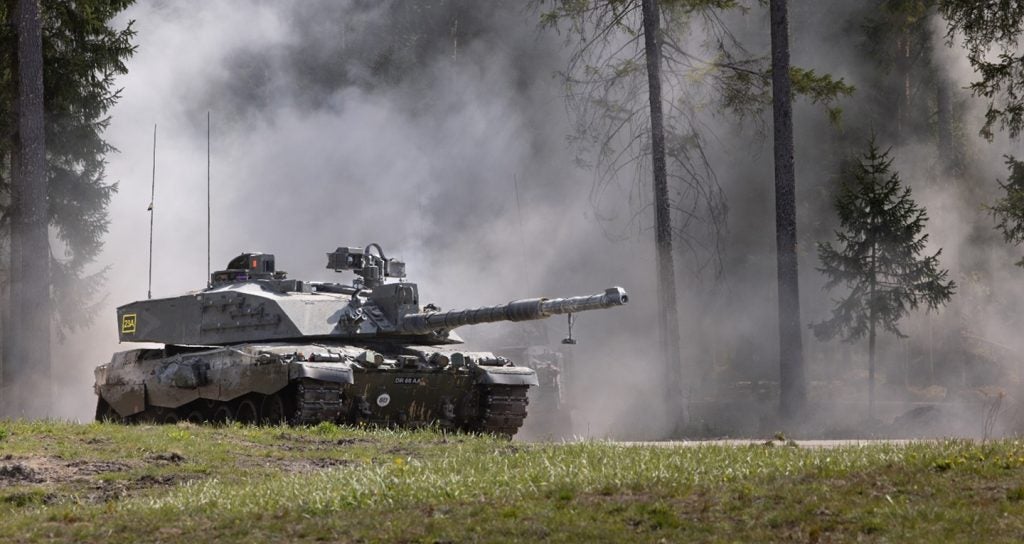
However, in 2025, the new UK Government claimed that the British Army had 288 Challenger 2 tanks, a figure likely inflated to include heavily cannibalised platforms.
Given the age of the Challenger 2 platform, and the previous operational availability, it is fair to assume a current baseline available fleet of ~150 vehicles.
Each of the 148 planned Challenger 3 tanks requires an available – and operational – Challenger 2 tank to use as a host platform for the new turret, main gun, and other upgrades.
Tank structure of the British Army
The British Army theoretically fields four tank regiments, divided across two armoured brigade combat teams, which are effectively combined arms formations derived from US Marine Corps structures.
However, in practice three of the regiments are equipped with the Challenger 2 tank, due to inventory and personnel shortages. In addition, the British Army is transitioning from a ‘Type 56’ armoured formation – where a regiment had 56 tanks – to the reduced Type 44 structure.
Under the Type 44 formation, 44 Challenger 2 tanks (in future the Challenger 3) are assigned to each regiment, broken down into three a reduced combat ‘sabre’ squadron of 14 vehicles apiece, with the two remainder assigned the HQ unit.
This would use 132 of the planned 148 Challenger 3 tanks in the British Army’s future formation, with the rest likely held in reserve.
The Challenger 3 is planned to achieve an initial operational capability in 2027, although supply chain difficulties could hinder this timeline, potentially moving it further into the late-2020s.
